Scolopacidae
Sandpipers are part of the Scolopacidae family, a diverse group of shorebirds that also includes turnstones, dowitchers, phalaropes, godwits, woodcocks, curlews and whimbrels. Most members of this family have bills that are long relative to their body size, with highly sensitive bill tips, allowing them to detect and capture prey hidden beneath wet sand or mud by touch. The Scolopacidae family is a great example of “ecological resource partitioning.” This means differences in physical traits (like bill length) help reduce competition among species that share the same habitat. Short-billed species tend to forage near the surface, while longer-billed species probe deeper for prey, enabling many kinds of shorebirds to forage side by side at nature’s invertebrate buffet without stepping on each other’s toes (or bills).
Calidris
Most birds commonly called “sandpipers” belong to the genus Calidris, a group of small to medium-sized birds with relatively short bills and long wings. These species often look similar and frequently form mixed-species flocks, making them challenging to tell apart. Collectively, they are affectionately known as “peeps.” They are highly migratory, traveling many thousands of miles between their breeding grounds in the Arctic and other northern regions to their winter ranges, which can spread across North America, deep into South America, or beyond. Twelve Calidris species are regularly found in Florida.
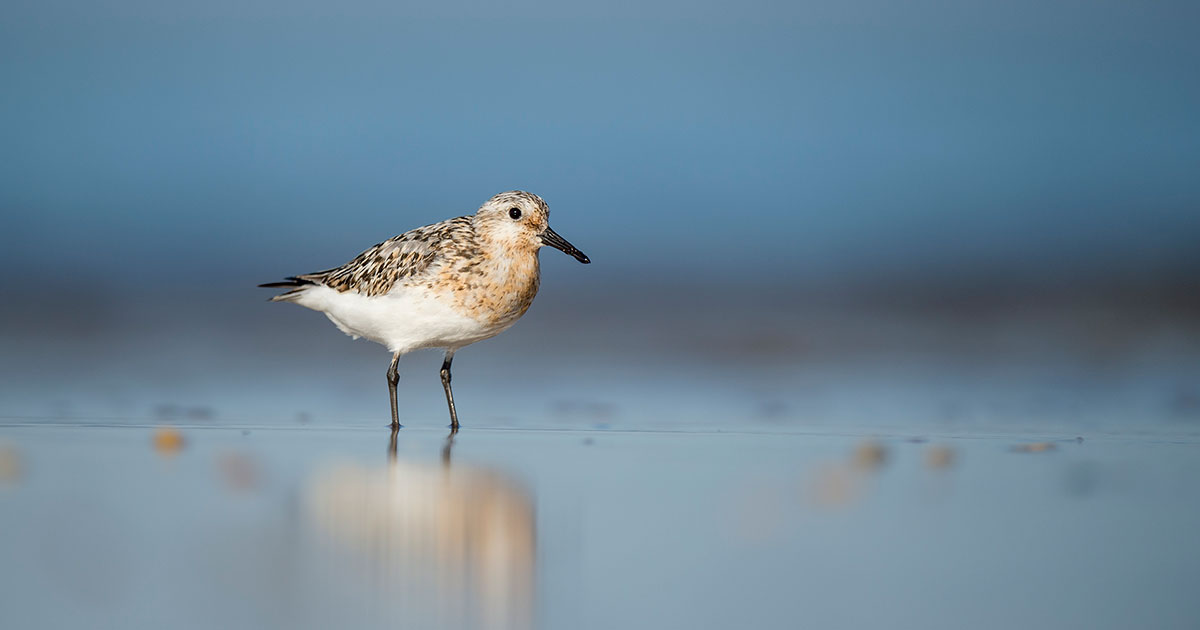
Sanderling – One of the most widespread sandpipers, the Sanderling is plump with a stout black beak and black legs. It’s easily recognized by its energetic behavior, as it scurries back and forth along the shore, chasing waves while feeding.
Purple Sandpiper – Named for the rare purple sheen on its wing feathers, the Purple Sandpiper also has yellow legs and a yellowish base to its bill, making it distinctive even when its purple coloration isn’t visible. Purple Sandpipers are considered rare in Florida and typically draw attention from birders eager to observe them in the state.
Western Sandpiper – These birds have black legs and a slightly longer, drooping bill. Breeding adults and juveniles feature gold and rufous markings on their back and head, setting them apart from the less vibrant species.
Semipalmated Sandpiper – The term “palmated” refers to the partial webbing between its toes, a feature it shares with the Western Sandpiper. The webbing is especially noticeable between the outer and middle toes. Because of their similarities, telling them apart in the field often requires a closer look. Semipalmated Sandpipers tend to have a shorter, straighter bill and a slimmer, plainer appearance.
Baird’s Sandpiper – These sandpipers have relatively long wings that extend past the tail and a slim, tapered appearance. Unlike many shorebirds that stick to open mudflats or beaches, Baird’s are more often found foraging in drier, grassy or vegetated habitats.
Pectoral Sandpiper – Larger than the typical “peep,” Pectoral Sandpipers are easy to recognize by the sharp contrast between their heavily streaked breast and clean white belly. They’re long-distance migrants, with most spending the winter in southern South America. However, a few make even more impressive journeys, reaching as far as Australia, New Zealand and Southeast Asia. During migration, they’re often found in freshwater wetlands, grassy edges and flooded fields.
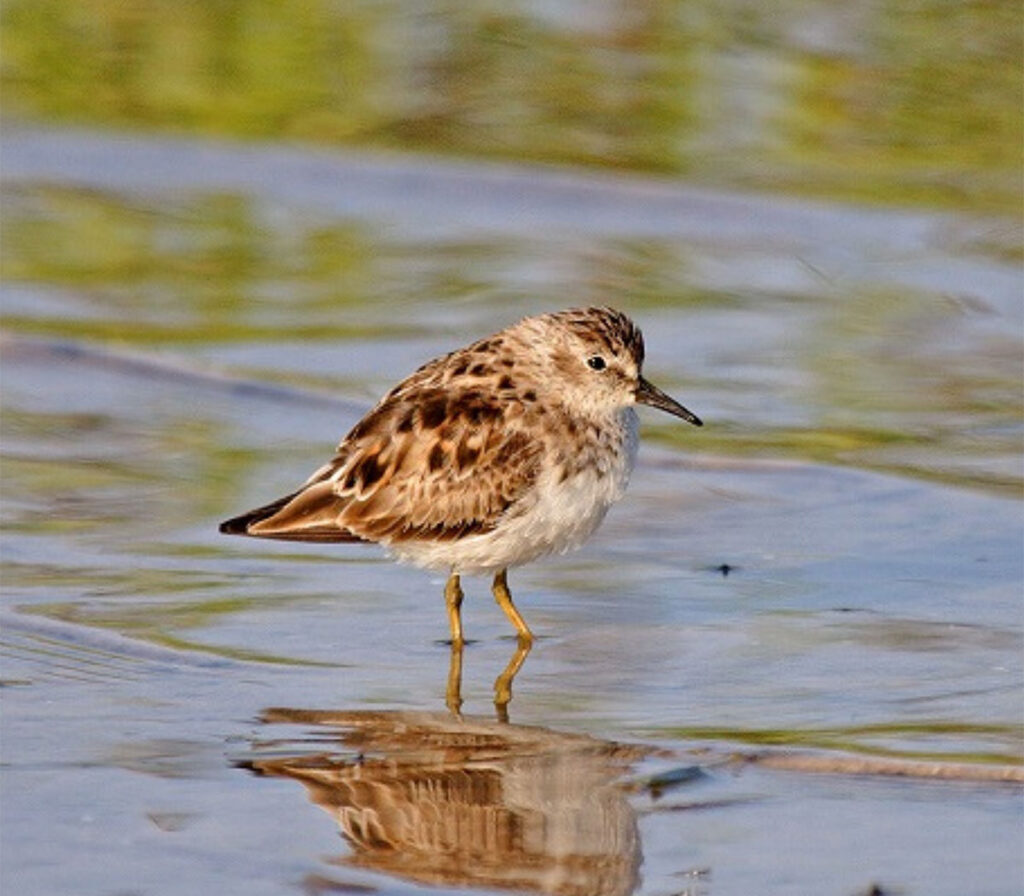
Least Sandpiper – The smallest of the sandpipers, weighing just one ounce and measuring 5-6 inches. It is easily recognized by its greenish-yellow legs, slightly crouched posture, and darker, browner plumage compared to other sandpipers. Females are slightly larger than males, a subtle difference that’s more noticeable to experienced birders.
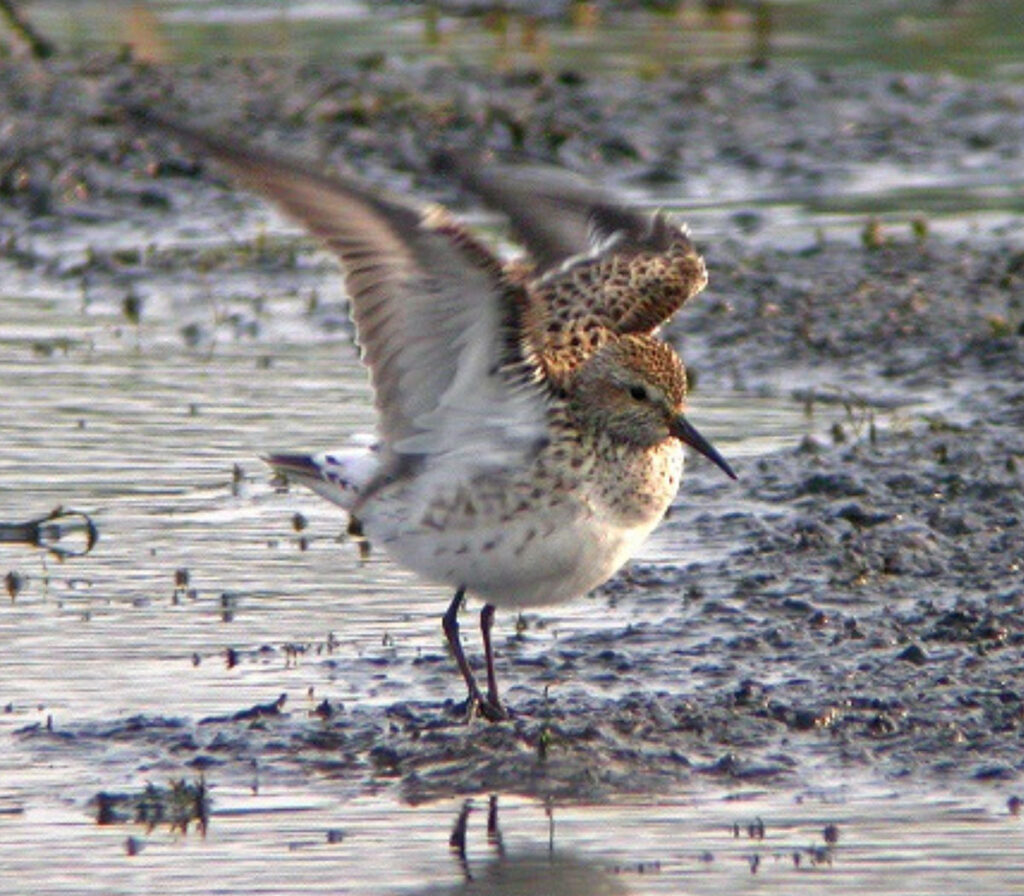
White-rumped Sandpiper – Slightly larger than the average “peep,” the White-rumped Sandpiper best known for its namesake feature: a bright white rump that flashes clearly in flight. It also has long wings that extend beyond the tail, giving it a sleek, elongated look.
Stilt Sandpiper – Preferring freshwater habitats over the tidal mudflats typical of sandpipers, the Stilt Sandpiper is often found alongside dowitchers and yellowlegs. It’s distinguished by a subtly curved bill and long, greenish-yellow legs that give it a tall, elegant look.
Buff-breasted Sandpiper – Unlike most sandpipers, the Buff-breasted Sandpiper hunts like a plover, using its short bill to grab prey rather than probing for underground food. It also prefers open grasslands and sod farms over mudflats and marshes.
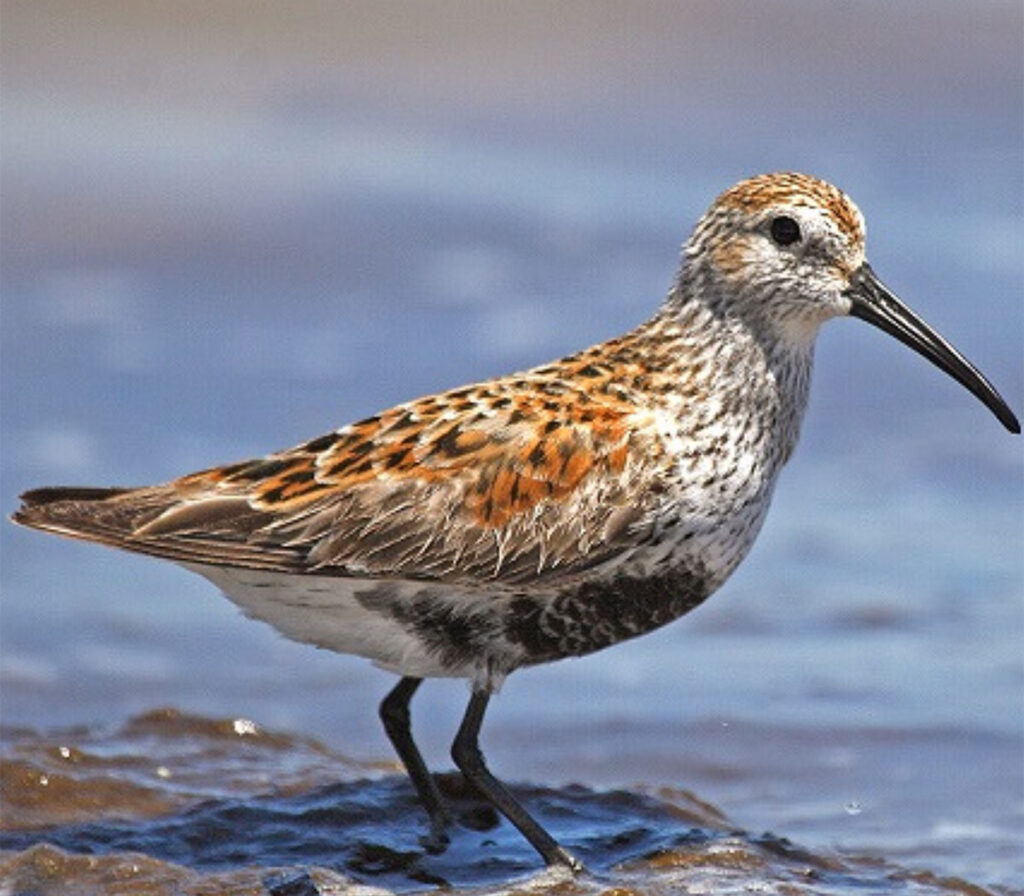
Dunlin – In breeding plumage, the Dunlin sports a distinctive black belly and rusty-toned back. While their bills are long and slightly curved, they don’t probe deeply into the sand, instead feeding just below the surface.
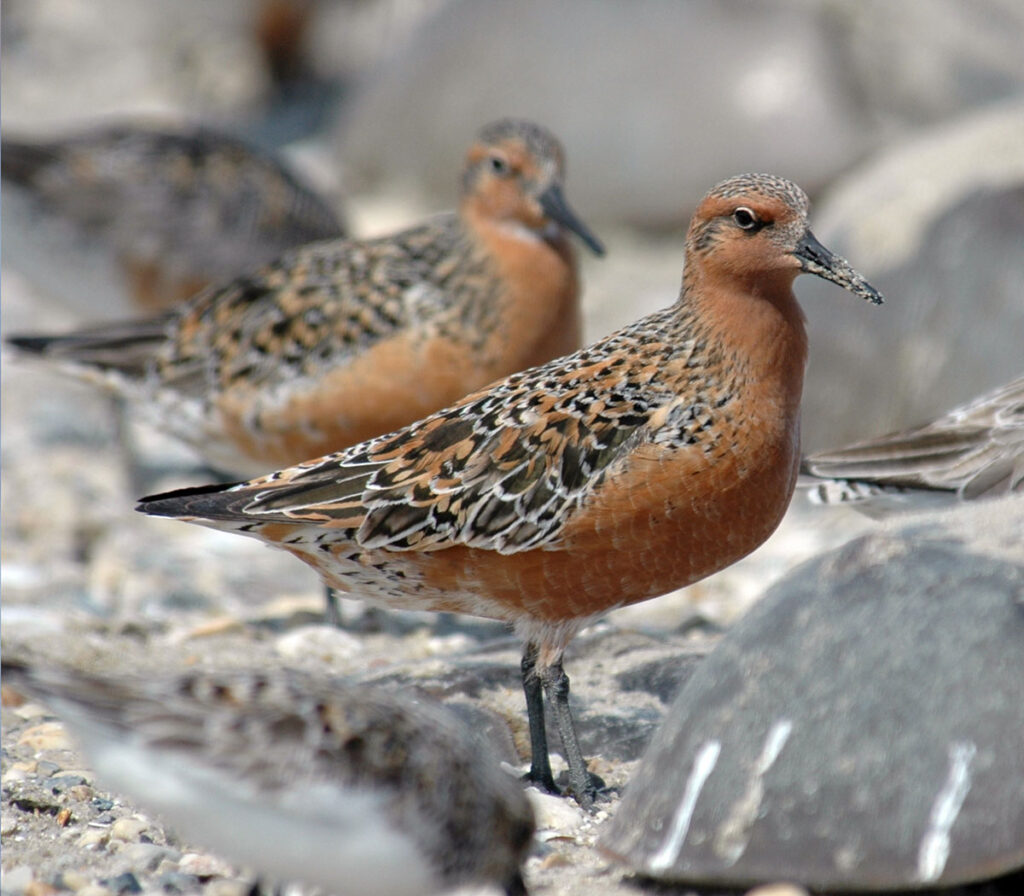
Red Knot – Red Knots are striking birds with rich cinnamon-colored undersides and mottled gray and rust-colored backs in breeding plumage. Florida is an important stopover and wintering site for the rufa subspecies, which is listed as Federally Threatened. These long-distance migrants travel thousands of miles each year, from Arctic breeding grounds to the southern tip of South America.
Other “Sandpipers”
There are a handful of birds in Florida with common names containing “Sandpiper” that don’t belong to the Calidris. They are:
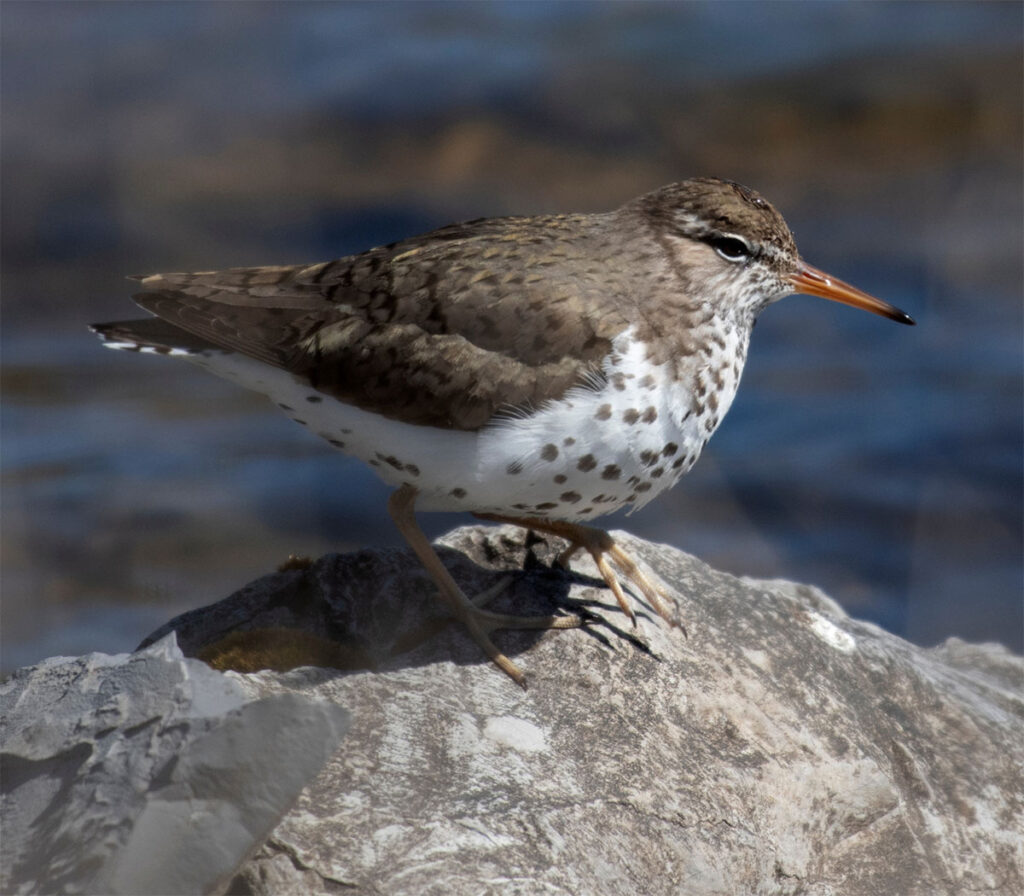
Spotted Sandpiper – Known for its distinctive spotted breast and teetering, bobbing gait, the Spotted Sandpiper belongs to the genus Actitis. The Spotted Sandpiper is often seen alone, patrolling the edges of freshwater streams, ponds and lake shores.
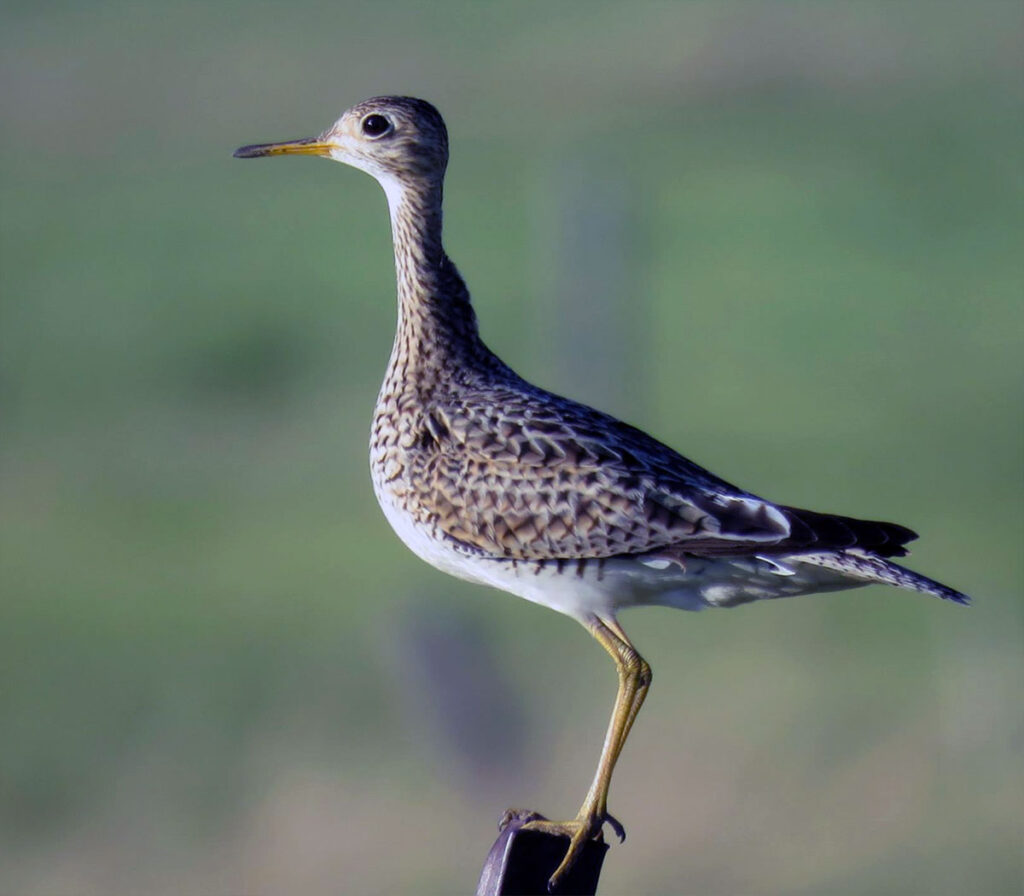
Upland Sandpiper – Unlike most shorebirds, the Upland Sandpiper prefers hunting insects in grasslands rather than shoreline invertebrates. Taxonomically puzzling, this species has bounced between shorebird groups like plovers and tattlers, but today it stands alone as the only living member of the genus Bartramia. Upland Sandpipers are uncommon in Florida but may be spotted during migration in the right habitat.
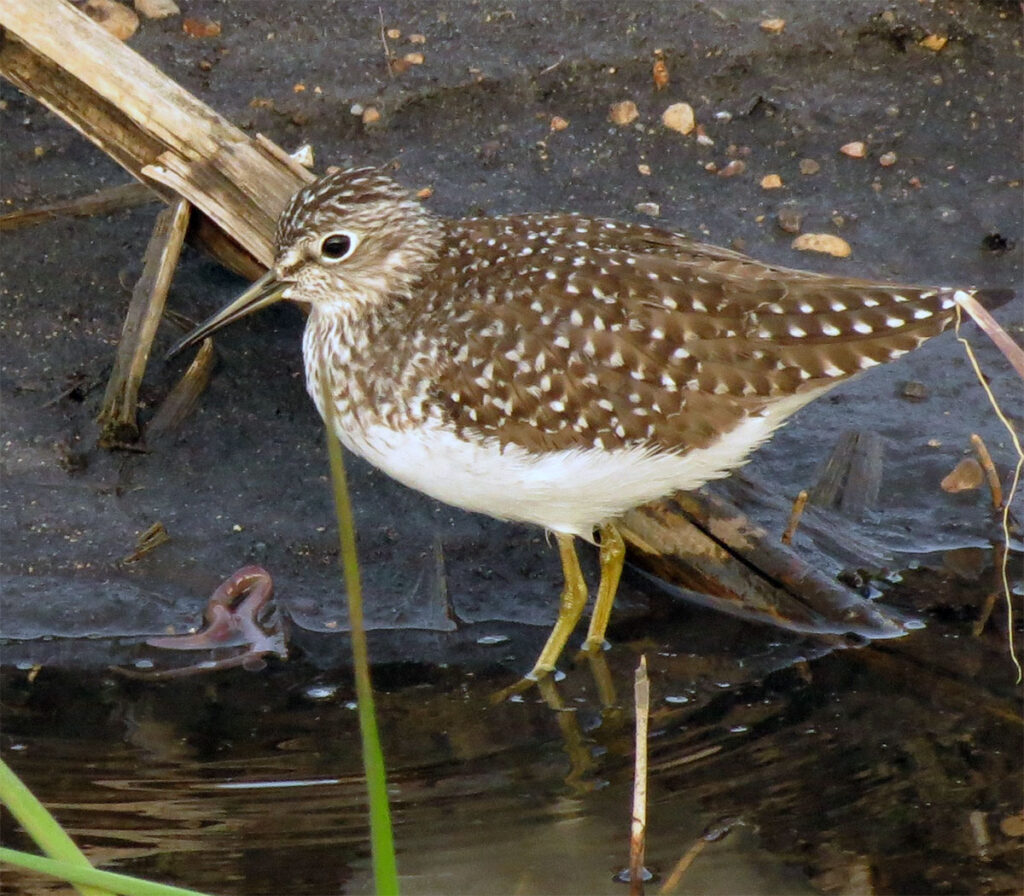
Solitary Sandpiper – Belonging to the genus Tringa, which also includes Lesser and Greater Yellowlegs, as well as Shanks, Tattlers and their allies, the Solitary Sandpiper is often seen alone. It can be recognized by its greenish legs and dark upperparts with pale spots, and by its behavior, particularly the way it bobs the back half of its body or shivers its tail and feet while foraging. This species prefers freshwater habitats like forested wetlands, ponds and ditches, especially during migration.